

When the IPL began in 2008, there were eight franchises, and the implicit understanding that money and stars combined with a well-managed team would eventually lead to every region in India getting its champion. Seventeen seasons later, two of the eight teams who were present at the inaugural edition of the league haven’t won a title yet. One of those franchises-Delhi Capitals-haven’t even reached a final before 2020 and lost that final. Another-Punjab Kings-reached the IPL 2025 final and lost by six runs.Royal Challengers Bengaluru, after 18 seasons of carrying the most famous failure in IPL history, finally managed a win in 2025. Which leaves Delhi all alone in the number one position of this not-so-good list.
The most unsuccessful franchise in IPL history is Delhi Capitals. The team, has played 274 matches over the course of 18 seasons in the IPL starting from 2008 and won 112 of them, lost 145, and has never been able to get its hands on the silverware. Its win percentage (44.36 percent) is the lowest of any long-standing franchise. In the 18 seasons since 2008 Delhi Capitals have used 11 different captains, they have featured some of the most skilled players on the planet at one point of time or the other-from Virender Sehwag and AB de Villiers to David Warner and Rishabh Pant-none of that was able to bring them an IPL trophy. This is not just bad luck, this is a systemic failure and that’s what we have examined here.
This isn’t an article listing the five worst teams and explaining each in a separate paragraph. This is an in-depth look into the reasons behind the failure of different franchises, what the data tells us about teams when you look past the win percentage and common characteristics among the greatest IPL failures.
The Framework: How to Define “Unsuccessful” in IPL
Win rate is not enough of an indicator of failure and success for an IPL team. A team that has come in from 2022 will be in very different circumstances as opposed to a franchise that has played since 2008, and has 270 matches under its belt. Ranking the IPL teams for failure needed an equation which could process all the dimensions at the same time.
The four figures of interest are, titles won, overall win percent across all seasons, appearances in final versus number of seasons played, and franchise age. The difference between a franchise playing 18 seasons without a trophy, versus one playing its fourth year, and still without a title is huge. The age of the franchise is the primary source of failure.
Combining these four variables in to one ranking should portray a far more truthful image of the league:
| TEAM | SEASONS PLAYED | MATCHES | WINS | LOSSES | WIN % | FINALS APPS | TITLES | FAILURE SCORE |
|---|---|---|---|---|---|---|---|---|
| Delhi Capitals | 18 (2008 to 2025) | 274 | 112 | 145 | 44.36% | 1 (2020) | 0 | Worst: 18 seasons, zero titles, one final |
| Punjab Kings | 18 (2008 to 2025) | 274 | 119 | 139 + ties | 45.24% | 2 (2014, 2025) | 0 | Second: two finals, zero titles, 6-run loss in 2025 |
| Royal Challengers Bengaluru | 18 (2008 to 2025) | 274 | 126 approx | 144 approx | 47% approx | 4 (2009, 2011, 2016, 2025) | 1 (2025) | Resolved: ended the wait in 2025 |
| Rajasthan Royals | 15 (excl. 2-yr ban) | 244 | 118 | 118 | approx 48% | 2 (2008, 2022) | 1 (2008) | One title in nearly two decades |
| Sunrisers Hyderabad | 12 (2013 to 2025) | 204 | 101 | 101 | approx 50% | 3 (2016, 2018, 2024) | 1 (2016) | Mixed: one title but repeated inconsistency |
| Chennai Super Kings | 16 (excl. ban) | Varies | High | Low | approx 59% | 10 | 5 | One of the most successful. Not in this conversation. |
| Mumbai Indians | 17 | Varies | High | Low | approx 57% | 5 | 5 | One of the most successful. Not in this conversation. |
The failure score column is not an equation. It is qualitative summary based on all 4 metrics. Delhi fares the worst as 18 seasons+ 0 title+ 1 final is combination none of the old franchise could replicate. Punjab is the runner up due to the two finals with no title and unique pain of missing the final by 6 runs in 2025, which stands in its own category.
Delhi Capitals: The Most Unsuccessful Team in IPL History
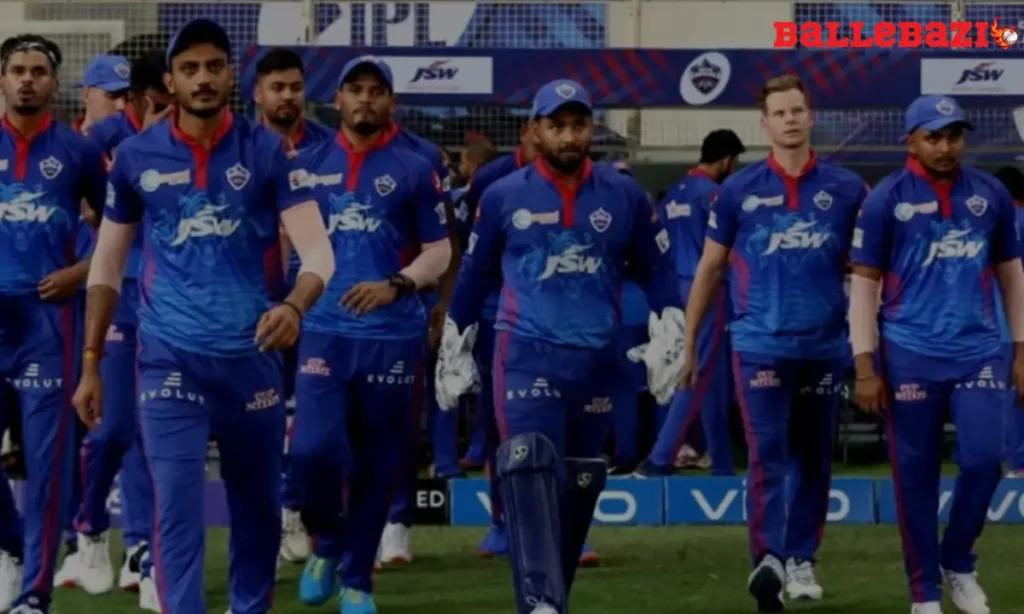
Delhi’s numbers are damning, needing no elaboration whatsoever. 145 losses out of 274 matches. Win-percentage of 44.36 per cent, which is the worst among IPL franchises that have featured since the inception. 18 seasons, 1 final (2020), lost to the Mumbai Indians. 0 trophies.
Delhi’s analytical success isn’t merely average; rather, it’s a testament to sustained underperformance and collapse. 2009 saw them finish 2nd on points and fail to make the cut owing to net run rate. They made it to the semi-finals in 2012, and were by some metrics the best team in the league stage in 2020, making it to their sole final before falling to a Mumbai Indians outfit that already possessed four titles and understood the pressure of a final.
Captaincy Instability: Eleven Different Captains in Eighteen Seasons
11 captains in 18 IPL seasons. Virender Sehwag to start things off in the Delhi Daredevils days, then Mahela Jayawardene, David Warner, JP Duminy, Zaheer Khan, Shreyas Iyer, Rishabh Pant, the list continues. But the problem is with each change there has also been a change in the tactical blueprint of the team, in the pecking order in the dressing room, in the dynamic between the captain and the coach.
And you could not contrast it more acutely with the Chennai Super Kings whose 2-decade-long captaincy conversation really boiled down to one sentence: MS Dhoni. Even when he stepped aside briefly in 2022 it went so badly that Jadeja’s captaincy had to be taken away from him mid-season. CSK know the value of captaincy stability for culture, performance under pressure, decision-making. Delhi has chosen to do the polar opposite at every available chance.
Changing captains isn’t merely optics. The captain of a cricket team decides the batting order, the field placings, the reviews and challenges, the choice between death-bowling variations, the morale of the entire dressing room. For a team constantly changing that decision-maker they can never develop that instantaneous bond between captain and players that allows those decisions to be made quickly, correctly, in high-pressure IPL knockout matches.
Auction Philosophy: Big Names Over Squad Balance
The history of auction buys in Delhi appears like a catalogue of sheer brilliance individual but never coming together as a unit. AB de Villiers, David Warner, Shikhar Dhawan, Rishabh Pant, Mitchell Marsh, Ricky Ponting coached by Sourav Ganguly as director. Year after year the buys were spectacular, the squad had at least one hole ( death bowling / middle order).
The auction strategy to win IPL titles doesn’t consist of procuring “big names”, instead balanced squad, which the Mumbai Indians did win 5 titles with the nucleus of Rohit Sharma, Jasprit Bumrah, Kieron Pollard and Hardik Pandya. Their other buys complement this nucleus and knew their roles well. Delhi kept trying to build from the top-down by adding marquee names, hoping the gaps fill by themselves.
2020 Final- The defining moment of failure
This final against Mumbai Indians has defined all why they haven’t been able to clinch the title. It was the only final appearance Delhi made and in the league stages of this tournament they were the best team on the circuit. They even beat Mumbai twice during the league stages and Rishabh Pant was in the best form of his career and Kagiso Rabada was the highest wicket-taker in the tournament.
The title match however saw Delhi losing the match by 5 wickets in the last 18.2 overs. Rohit Sharma smashed 68 of 51 balls and Mumbai never really broke a sweat. The Delhi death bowling- which had been the weakness of their team over many years of IPL cricket, leaked profusely at the right time. Rabada had only gone for 32 runs in his four overs in this match.
The lesson of 2020, which Delhi have still not heeded over the years, is you cannot win the IPL title by just two or three stars and then the rest of your squad is a collection of changing parts. The other teams that have beaten Delhi, Mumbai, Chennai, Kolkata all have teams where the 8, 9, 10 best players on the day could make a match-defining impact;Delhi haven’t done this ever.
Punjab Kings- The 6 run final and 18 years of agony
The only franchise to still hold the record for never winning the title besides Delhi is Punjab Kings (though Delhi at least made it to one final). Punjab first reached the final in 2014 when they lost to Kolkata Knight Riders and then waited 11 years for their second appearance in 2025 when they lost to Royal Challengers Bangalore by 6 runs.
Six runs. This is the difference between the Punjab Kings and the IPL trophy, after 18 seasons. The 2025 final loss by 6 runs is undoubtedly the most agonizing near miss in the history of the IPL if it is contextualised appropriately.RCB who themselves had been waiting 18 years for their title clinched it with 6 runs against a franchise who had themselves waited for 18 years for their own title. They had carried the same baggage of expectation for so long, only one of them was going to come out with it all. It was RCB.
The problem with Punjab is also different to the Delhi franchise- not in the captains being changed each year but the over-reliance on one player for the batting order and the absence of the bowling attack capable of defending the total in the last four overs. Their frequent playoffs before 2017when KL Rahul was with the franchise, then rebuild and again dependence on a single batsman…Chris Gayle, Glenn Maxwell, KL Rahul, Shikhar Dhawan…individually phenomenal but collectively nothing more than the sum of its parts.
| SEASON | PBKS RESULT | REASON FOR FAILURE | AUCTION STRATEGY THAT YEAR |
|---|---|---|---|
| 2008 | 7th place | Chaotic first season. Squad imbalance. | Overloaded with international names. |
| 2014 | Runners-up | Lost final to KKR. First final after 7 seasons. | Best season. Balance achieved briefly. |
| 2018 | Strong start, collapsed | Second half implosion after dominant first half. | Over-reliant on Gayle and Mujeeb. |
| 2020 | 6th place | Inconsistent throughout. Death bowling weak. | Maxwell signed at high cost. Poor balance. |
| 2022 | 5th place | Again missed playoffs. Core renewal failed. | New core but no depth in bowling. |
| 2024 | Runners-up | Lost final to KKR again in Qualifier 2. | Strong batting but bowling leaked in final. |
| 2025 | Runners-up | Lost to RCB by 6 runs. Second final lost. | Best squad in years. Still not enough. |
The 2025 final defeat is the most analytically significant Punjab result in the franchise’s history. They had rebuild the squad cleverly after years of auction mistakes. They had pace in the powerplay, batting depth in the middle order, a bowling attack which had out performed expectations throughout the season. They reach the final, lost by 6 runs. Six runs over 20 overs is less than a single boundary. If a single ball had been bowled differently, at any point in any of the 20 overs, and PBKS win the IPL title for the first time. They didn’t. Such is the nature of consistent IPL failure at the highest level. The gulf between winners and runners up isn’t a deficiency of talent, it’s the margin between executing, and not executing, in a single moment over the course of five hours of cricket.
Royal Challengers Bengaluru: Failure No More
For a decade and more, the conversation surrounding failing IPL teams began with RCB. With Virat Kohli, AB de Villiers, Chris Gayle, three of the most explosive players T20 cricket has ever seen at their peak. Four finals in eighteen seasons, zero titles. The brand synonymous with lovely, enthralling, utterly incomplete cricket.
RCB deserve space in this article not because they still epitomise failure, but because their 2025 triumph epitomizes the lessons the other failing sides must learn. RCB won in 2025 not by spending most money or acquiring the biggest names. They won because they had a settled, stable, calm captain for the second year running in Rajat Patidar. They won because their bowling attack, comprising of Bhuvneshwar Kumar and Josh Hazlewood at the forefront, was capable of defending totals. They won because they had stopped trying to outbat sides and instead built a team that could win tight matches.
The lesson from RCB’s 2025 win for both Delhi and Punjab is a stark and uncomfortable one. RCB lost for 18 years with the strongest batting lineup in the IPL. In the year that they won, their batting was not the strongest lineup in the IPL. Instead they had a balanced unit, settled captaincy and a capable death bowling unit. This is exactly what neither Delhi nor Punjab have managed to achieve. RCB’s 2025 win is not just their title, it is a comprehensive road map for what the other trophy-less teams need to start doing.
The Defunct Teams: IPL’s Complete Failures
Any analysis of unsuccessful IPL teams that ignores the franchises that no longer exist is telling an incomplete story. The IPL has seen five franchises fold or be removed since 2008, and each of them represents a category of failure more absolute than losing finals.
| DEFUNCT TEAM | YEARS ACTIVE | SEASONS | REASON FOR DEPARTURE | BEST RESULT |
|---|---|---|---|---|
| Deccan Chargers | 2008 to 2012 | 5 | Franchise terminated by BCCI for financial irregularities. | IPL Champions 2009. Won it once, then collapsed. |
| Kochi Tuskers Kerala | 2011 | 1 | Franchise terminated after one season for contract violations. | 10th place in their only season. |
| Pune Warriors India | 2011 to 2013 | 3 | Franchise terminated after 3 seasons. Financial disputes with BCCI. | Bottom half in all three seasons. Never competitive. |
| Rising Pune Supergiant | 2016 to 2017 | 2 | Temporary replacement franchise during CSK ban. Served its purpose. | Runners-up in 2017. Not a long-term failure. |
| Gujarat Lions | 2016 to 2017 | 2 | Temporary replacement franchise during RR ban. Served its purpose. | Semi-final 2016. Not a long-term failure. |
Deccan Chargers are the most interesting case in this group. They won the IPL title in 2009 under Adam Gilchrist, became the second-ever champions, and then were terminated by the BCCI in 2012 for financial irregularities related to ownership issues. Their win made them a champion. Their removal made them a cautionary tale. Winning the IPL is not sufficient protection against institutional failure if the franchise ownership cannot maintain its obligations to the board.
Kochi Tuskers Kerala and Pune Warriors represent straightforward business failures. Neither was competitive on the field. Both had structural problems in ownership before the cricket even started. Their removal was not about on-field performance. It was about whether the franchises could function as businesses. The lesson for investors is that the IPL franchise model requires sustained financial commitment that cannot be made dependent on match outcomes.
The Structural Reasons Behind IPL Failure: What the Data Shows
Across every unsuccessful IPL franchise, active and defunct, the failures share identifiable structural characteristics. They are not random. They are not primarily about individual player quality. They are about decisions made at the franchise level that create conditions for failure regardless of which players are available.
Reason 1: Captaincy Churn
The relationship between stable captaincy and IPL success is about as law-like as any stat set from the tournament gets. The two Mumbai Indians wins had virtually one captain apiece. The five Chennai Super Kings wins have all had one. The two Kolkata Knight Riders wins have either been around the same captain (Iyer, in 2024, after previously around Iyer again) or a dynasty’s worth of the same. The franchises with success stick with a captain through the rough bits; the failed franchises switch as soon as results dip.
The natural human inclination when faced with clear, obvious leadership failure is to change the captain in the bad bits. It’s exactly the wrong thing to do. Captaincy-reading the game, managing a dressing room, making split-second decisions under extreme stress-is a learned ability built on repetition. Three times through the tough chases and the captain is a bit more adept on the fourth. A captain, regardless of any raw talent, starts on zero on every score, save for what the nets can teach.
Reason 2: Auction Philosophy That Prioritises Stars Over Systems
Every franchise which failed so far has at some stage tried to build a squad around a name rather than a system. And I can see why from a marketing perspective. The IPL is a media product, perhaps as much as it is a cricket match, and these stars sell tickets, broadcast audiences and sponsorships. However, T20 cricket in IPL is won by the small margins – death bowling between overs 17 and 20, power play bowling between 1 and 6 overs, and batting depth that can contribute 20 runs in the 19th over when at 5 wickets down. These are not things that come from buying a batsman for Rs 20 crore. These are things that come from buying six people at Rs 3 crore each, who can perform specific roles, that have had plenty of practice in delivering under pressure. The successful teams are those which build around the system. The failures, with all their stars, continue to buy again, and fail again
Reason 3: Failure to Retain a Core
Mumbai have held onto Rohit, Bumrah, Hardik and Kieron in pretty much all of their years in the league, and were particularly bolstered during the period where players could only be retained for a few years by this fact. Retaining a core meant every auction was addition to a unit not the start of building one. New players joining a team that already has an established identity, leaders and culture. The player accommodated by the team, rather than the team adapting to the player.
Delhi and Punjab have both typically gone into auction having to start a new combination every year. Different combinations of retained players each season, different cores, different identities. New players are brought into teams that are still determining their own identity. This process often takes 6-8 weeks of the ten-week tournament, resulting in a team that only gells in the latter half of the tournament which is not enough to consistently make it to the top four.
Reason 4: Death Bowling Weakness
If we look at all IPL winners there’s one thread which is consistent among their bowling attacks. All IPL winners have had at least one bowler capable of consistently delivering the 18th, 19th and 20th over with under 10 runs per over, picking up wickets in the process. Jasprit Bumrah for Mumbai. Dwayne Bravo for Chennai. Mohammed Shami for the Gujarat Titans in 2022. The death bowling expert isn’t always the most expensive member of the squad but it’s always in the squads which have won it.
Delhi have time and time again possessed great power play bowling, but weaker death bowling attacks. Punjab’s history in most of their failures has seen them face the same dilemma, their attacks conceding over 50 in their final 5 over regularly to cost them close games. The 2025 final was decided by 6 runs. Death bowling economy across the latter half of that season cost them far more than 6 runs on more than one occasion before the final.
The RCB Model: What the Trophyless Teams Must Learn
The most telling of all the events of the 2025 IPL for teams looking for their maiden title, however, was RCB winning. They weren’t winning because of another phenomenal season for Virat Kohli, they were winning because all the things they previously hadn’t got for their title assaults were all present for their 2025 one.
Their title-chasing has not had a captain before the 2025 edition whose success was not inextricably linked to his own performances, than Rajat Patidar has, as skipper. Patidar is not a world superstar, he is just an extremely good domestic cricketer, with excellent game sense and communication and tactical nous when playing for the collective good rather than personal feel. Throughout every previous challenge, they have been captained by perhaps the greatest batter in the history of world cricket. In that event of a star batting performance failing to produce runs the team has been found lacking an alternative plan.
The most telling bowling alteration has been in the years and years of RCB sides that have given the game away in the death with bowling attacks which have failed to take the wickets that they have always batted to create the scores to have them take. In the 2025 edition, with Bhuvneshwar Kumar and Josh Hazlewood the death bowling arrived in the IPL with the kind of consistent performances we’ve always seen in the RCB batting, but never in their bowling attack. The 2025 RCB found themselves taking matches with their batting putting up some fairly poor totals, and their bowling just saving the game, something no other RCB side has managed to do in their 18 years.
The lesson to Delhi and Punjab from the RCB example is that the superstars do not pose a challenge; teams win with superstars, it’s a system supporting the superstars when they are ordinary that offers that challenge, a system that was built in 2025 for RCB, not so much yet, by the Delhi and Punjab franchise in 18 years.
IPL 2025: How the Unsuccessful Teams Performed
| TEAM | IPL 2025 RESULT | WINS | LOSSES | KEY OBSERVATION |
|---|---|---|---|---|
| Delhi Capitals | 5th place. Missed playoffs. | 7 | 6 (plus 1 NR) | Inconsistent mid-season. Classic Delhi implosion after strong start. |
| Punjab Kings | Runners-up. Lost final to RCB. | Strong league campaign | Strong knockout run | Lost by 6 runs. Closest they have come in 11 years since 2014 final. |
| Royal Challengers Bengaluru | Champions. First title. | Best playoff record | Minimal | Settled captaincy, balanced bowling. The model for others. |
| Rajasthan Royals | Early exit. | Inconsistent | Several | Failed to replicate 2022 final form. Sanju Samson form critical. |
| Sunrisers Hyderabad | Qualified, did not progress | Reasonable | Several | 2024 finalists could not repeat. Bowling attack overperformed in 2024. |
| CSK | Missed playoffs. | Below par | Above average losses | Transitional season. Dhoni’s reduced role affected balance. |
The Pattern Is the Problem
If there’s any franchise the absolute worst in the IPL it’s Delhi. Second worst is Punjab. Third was (until at least 2025) RCB. All of them have identical structural problems though the mix differs. RCB ended up getting themselves beaten by tweaking things that matter-captain stability and bowling balance-rather than by buying more or getting in big names. Delhi and Punjab should now be able to read that data. Eighteen seasons. Different captains. Spending money in the auction without winning titles. RCB have the textbook on exactly what it takes to do this, and this pattern is no accident. It is intentional. Every season Delhi and Punjab make the same decisions and get the same result. They get their history. They end up with the most unsuccessful IPL team of all-time.
Frequently Asked Questions: Unsuccessful Team in IPL
Which is the most unsuccessful team in IPL?
The most unsuccessful team in IPL history is Delhi Capitals. They have played 274 matches across 18 seasons since the tournament began in 2008, won 112 of them, and have a win rate of 44.36 percent, the lowest among long-standing franchises. They have appeared in one final, in 2020, which they lost to Mumbai Indians. They have had 11 different captains and have never won the IPL title.
Which IPL teams have never won a title?
As of after IPL 2025, two franchises that have been active since the start of the IPL have never won the title: Delhi Capitals and Punjab Kings. Royal Challengers Bengaluru ended their title drought in 2025. Delhi and Punjab are the only original franchises to still be waiting. Additionally, the defunct Kochi Tuskers Kerala and Pune Warriors India never won, but they no longer exist as franchises.
Why have Delhi Capitals never won the IPL?
Delhi Capitals have failed to win the IPL for three structural reasons that appear consistently across their history. First, captaincy instability: they have had 11 different captains in 18 seasons, which prevents any long-term tactical identity or dressing room culture from forming. Second, auction philosophy that prioritises marquee names over squad balance, leaving recurring holes in death bowling. Third, the failure to retain a consistent core of players across seasons, meaning the team rebuilds its identity each year rather than compounding on it. The 2020 final loss to Mumbai Indians, when they were the better team on paper, is the most complete expression of these problems.
Has Punjab Kings ever won the IPL?
No. Punjab Kings, previously known as Kings XI Punjab, have never won the IPL title despite playing since the inaugural 2008 season. They reached the final in 2014 and lost to Kolkata Knight Riders. They reached the final again in 2025 and lost to Royal Challengers Bengaluru by 6 runs. That 6-run loss in 2025 is the narrowest title miss by any franchise in IPL history and extends Punjab’s title drought to 18 seasons.
What happened to Deccan Chargers?
Deccan Chargers were one of the original eight IPL franchises and won the IPL title in 2009 under Adam Gilchrist. They were terminated by the BCCI in 2012 due to financial irregularities related to ownership disputes and failure to meet franchise obligations. Their termination led to the auction of a new Hyderabad franchise, which became Sunrisers Hyderabad in 2013. Deccan Chargers remain the only IPL champion franchise to have been terminated.
What do the most unsuccessful IPL teams have in common?
The most unsuccessful IPL teams share four structural characteristics. They change captains frequently, preventing tactical identity and dressing room stability. They build squads around one or two marquee names rather than squad balance, leaving specific roles, typically death bowling, underpowered. They fail to retain a core of players across multiple seasons, forcing a rebuild of team chemistry every year. And they do not have at least one reliable death bowling specialist who can consistently bowl overs 18 to 20 under pressure. These are not match-specific failures. They are franchise-level decisions that produce predictable results season after season.
Did RCB win the IPL 2025?
Yes. Royal Challengers Bengaluru won the IPL 2025 title, their first in 18 seasons. They beat Punjab Kings in the final. The win removed RCB from the conversation about unsuccessful IPL teams and left Delhi Capitals as the sole original franchise to have never won the title. RCB won under captain Rajat Patidar, with a bowling attack built around Bhuvneshwar Kumar and Josh Hazlewood that could defend totals in a way previous RCB teams could not.
Also Read About: Jemimah Rodrigues Net Worth: ₹16 Crore Fortune, Grade A BCCI Contract, WPL Salary & Complete Success Story